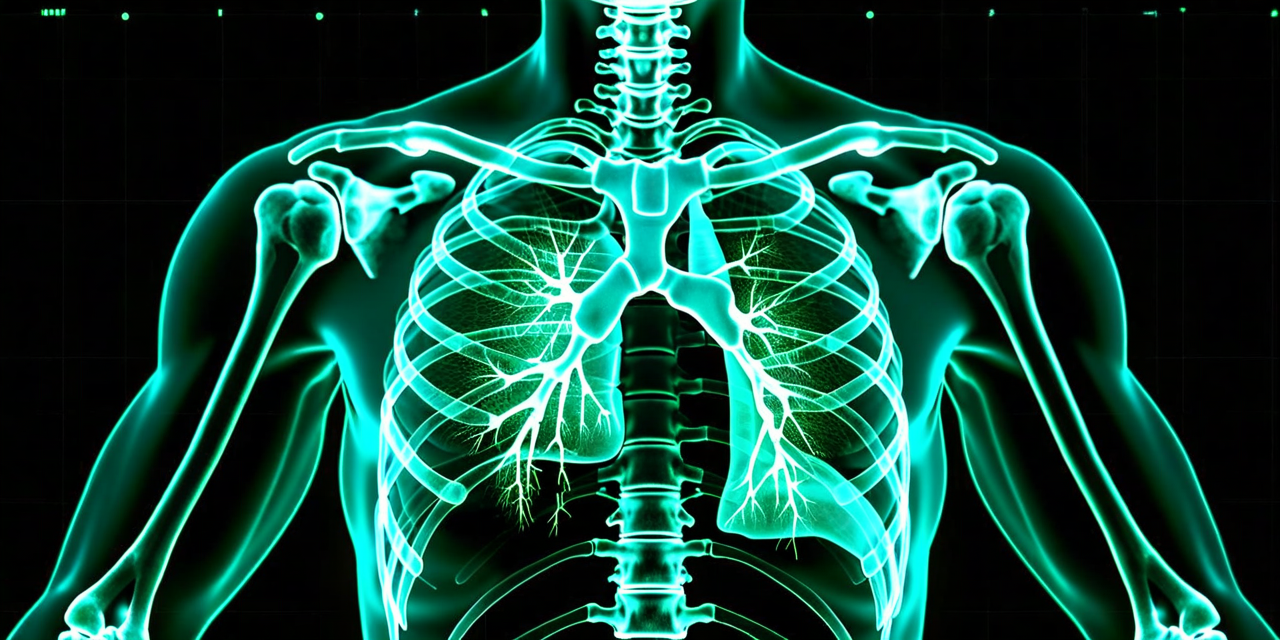
Radiology is entering a period of fundamental transformation. The convergence of advanced AI architectures, large-scale clinical datasets, and maturing regulatory frameworks is accelerating changes that would have seemed speculative a decade ago. This article identifies six AI trends that will most significantly shape radiology practice over the coming decade — and what they mean for hospitals, radiologists, and patients.
Today's AI radiology tools analyze imaging data in isolation. The next generation will correlate imaging findings with genomic data, laboratory values, pathology results, and longitudinal patient records to generate truly integrated diagnostic assessments.
Large language models (LLMs) and vision-language models are already demonstrating the ability to synthesize information across data types. GPT-4V and specialized medical multimodal models can read chest X-rays, interpret clinical notes, and generate diagnostic impressions that account for clinical context — something current generation imaging-only AI tools cannot do. As these systems are validated in clinical settings and achieve regulatory clearance, the radiology report will evolve from a siloed imaging document into a comprehensive clinical decision support artifact.
The implications for workflow are profound. Rather than the radiologist synthesizing imaging findings with clinical context manually, AI will deliver pre-integrated assessments that require the radiologist's confirmatory judgment rather than their integrative cognitive labor.
The deep learning revolution in medical imaging has been dominated by task-specific models: one model for lung nodule detection, another for brain tumor segmentation, another for cardiac function assessment. This approach creates significant deployment complexity — a hospital may need dozens of separate AI tools to cover its clinical needs.
Foundation models — large-scale pre-trained models that can be fine-tuned for multiple tasks from a single base — are now entering medical imaging. Models like SAM (Segment Anything Model) and its medical adaptations, MedSAM and SAM-Med2D, can perform segmentation tasks across diverse anatomical structures and imaging modalities from a single model architecture. TotalSegmentator, trained on CT data, segments 117 anatomical structures in under 1 minute — a capability that would have required dozens of specialized models two years ago.
The shift to foundation model architectures will consolidate the vendor landscape, reduce integration complexity for hospitals, and accelerate AI deployment timelines by reducing the data requirements for new clinical applications.
Current AI diagnostic tools tell radiologists what is present in an image. Predictive imaging AI will tell clinicians what is likely to happen next. This shift from descriptive to predictive analytics represents one of the most clinically significant advances in the pipeline.
Early examples are already in clinical use. AI models analyzing cardiac CT can predict five-year cardiovascular event risk from coronary calcium scores and aortic morphology. Radiomics models extract hundreds of quantitative image features from tumor CT scans and predict response to chemotherapy or radiotherapy — enabling oncologists to select treatments based on predicted efficacy rather than empirical trial and error. Brain MRI AI models are beginning to predict conversion from mild cognitive impairment to Alzheimer's disease years before clinical symptoms appear.
As these predictive capabilities mature and are validated in prospective trials, radiologists will transition from pure diagnosticians to prognostic partners — contributing risk predictions and treatment response estimates alongside structural findings.
One of the most persistent barriers to AI medical imaging development has been data privacy regulation. Sharing patient imaging data across institutions for AI training raises significant HIPAA, GDPR, and APPI compliance concerns, limiting the scale and diversity of training datasets available to most AI developers.
Federated learning addresses this by distributing model training across institutions. Each hospital trains the model on its local data, and only model weights — not patient data — are shared with a central server for aggregation. The aggregated model benefits from the diversity of all participating datasets without any patient data leaving institutional boundaries.
Large-scale federated learning consortia are now operational in medical imaging. The Intel-University of Pennsylvania federated learning initiative for brain tumor segmentation demonstrated that federated models trained on data from 71 institutions across six continents outperformed models trained at any single center. This architecture will become the standard approach for building the next generation of high-performance, globally validated radiology AI models.
The global radiology workforce is concentrated in high-income countries. Sub-Saharan Africa, South and Southeast Asia, and other low-and-middle-income regions face severe radiology specialist shortages, with some countries having fewer than one radiologist per million population. The diagnostic burden — tuberculosis, HIV-related complications, trauma, obstetric complications — is enormous.
Autonomous AI diagnostic systems, capable of interpreting imaging studies and generating clinical recommendations without radiologist supervision, represent a transformative opportunity in these settings. The regulatory trajectory is encouraging: the FDA's Software as a Medical Device (SaMD) framework for autonomous diagnostic AI has been progressively clarified, and WHO has published guidelines supporting AI diagnostic deployment in resource-limited environments.
Chest X-ray AI tools with autonomous diagnostic capability for TB and pneumonia are already deployed in several low-income country programs. As evidence accumulates and regulatory frameworks mature, autonomous radiology AI will increasingly serve as a primary diagnostic resource in regions where human radiologist access is simply not possible at scale.
Current clinical AI systems are static: trained, validated, deployed, and then fixed. As patient populations, imaging protocols, and scanner hardware evolve, model performance can drift — sometimes substantially. Continuous learning systems address this by automatically incorporating new clinical data into model updates in a controlled, quality-assured manner.
Building continuous learning into clinical AI infrastructure requires careful design: mechanisms to detect performance drift, automated retraining pipelines, validation gates before any updated model reaches clinical deployment, and regulatory change notification procedures. This is non-trivial engineering, and the FDA's evolving framework for "predetermined change control plans" in AI/ML SaMD is designed to enable it while maintaining safety oversight.
Hospitals deploying AI diagnostic tools should ask vendors about their continuous learning roadmap and change management procedures. Static models trained on data from 2022 may perform suboptimally on images from 2026 scanners with updated reconstruction algorithms. The best long-term AI partnerships will include adaptive model management as a core service commitment.
The trends described here are not distant speculations — they are in various stages of research, validation, and early clinical deployment today. Radiologists and hospital leaders who engage with these developments now will be better positioned to evaluate, select, and deploy the next generation of AI tools effectively.
The most forward-looking radiology departments are already building AI literacy programs for radiologists, establishing data governance frameworks for AI training data participation, and creating AI performance monitoring infrastructure that can track deployed model performance over time. These organizational capabilities will be as important as the AI tools themselves in determining which institutions lead — and which lag — in the AI-integrated radiology era.