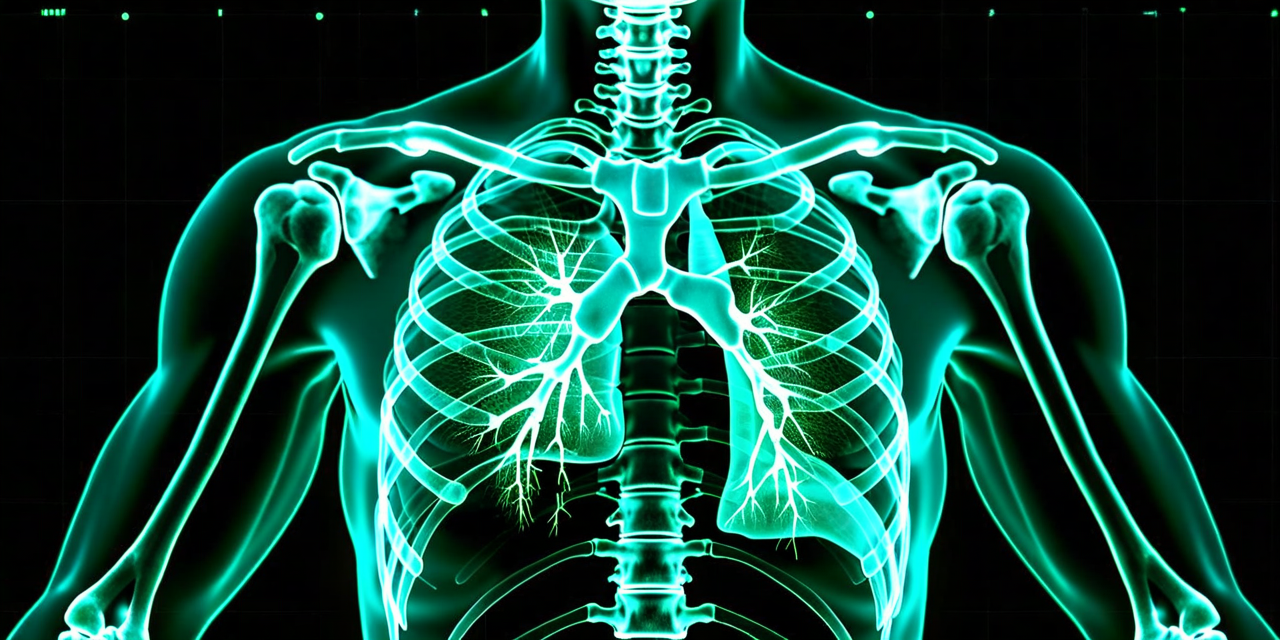
Deep learning has moved from research paper to radiology department faster than almost any other medical technology in recent memory. In less than a decade, convolutional neural networks have progressed from achieving basic chest X-ray classification to outperforming specialist radiologists on specific detection tasks. Understanding how this technology works — and where it still has limitations — is essential for any clinician engaging with AI-assisted diagnostics.
At the heart of medical imaging AI is the convolutional neural network. Unlike traditional machine learning approaches that required hand-crafted feature extraction, CNNs learn to identify diagnostically relevant features directly from raw pixel data. Early layers detect simple patterns — edges, gradients, curves. Deeper layers combine these into complex representations: calcified nodules, cortical irregularities, perfusion deficits.
Modern architectures used in radiology AI include variants of ResNet, EfficientNet, and Vision Transformers (ViTs). These models are typically pre-trained on large general image datasets (such as ImageNet) and then fine-tuned on annotated medical imaging datasets. Transfer learning dramatically reduces the amount of labeled clinical data required to achieve strong performance — a critical advantage given the cost of expert annotation in medicine.
The clinical applications where deep learning has demonstrated the strongest evidence base share a common characteristic: high-volume, pattern-consistent tasks where human fatigue and attention variability introduce meaningful diagnostic error.
Deep learning models are only as good as the data they are trained on. In radiology AI, this creates a set of well-documented challenges. Most high-performing models were trained on data from a small number of academic medical centers in high-income countries. When deployed in community hospitals with different patient demographics, scanner hardware, or imaging protocols, performance often degrades — sometimes significantly.
This phenomenon, known as dataset shift or domain shift, is one of the primary reasons radiology AI products that perform brilliantly in controlled validation studies sometimes disappoint in real-world deployment. Addressing it requires either large, geographically diverse training datasets or robust fine-tuning pipelines that allow models to adapt to site-specific imaging characteristics.
Federated learning offers a promising solution: multiple hospitals contribute to model training without sharing raw patient data, preserving privacy while building a more diverse and representative training set. Several major radiology AI vendors are now investing in federated learning infrastructure as a core product differentiator.
One of the recurring concerns among radiologists adopting AI tools is the lack of interpretability in deep learning predictions. When a CNN flags a lesion as malignant with 94% confidence, it is not immediately clear which image features drove that prediction. This "black box" quality conflicts with medical practice norms, where clinicians are expected to justify their findings with observable evidence.
Gradient-weighted Class Activation Mapping (Grad-CAM) and similar saliency techniques have emerged as a partial solution, generating heatmaps that highlight which regions of the image most influenced the model's prediction. While these visualizations are imperfect proxies for true model reasoning, they give radiologists a reference point for validating AI findings against their own perceptual assessment.
The field is moving toward inherently interpretable architectures and concept-based explanations that align more directly with clinical vocabulary — describing predictions in terms of recognized imaging features rather than raw pixel activations.
Demonstrating that AI actually improves diagnostic accuracy in deployed settings — as opposed to on curated benchmark datasets — requires prospective, randomized study designs. Several trials have attempted this. A multicenter trial published in The Lancet Digital Health evaluated AI-assisted chest X-ray reading in an emergency department setting and found a statistically significant reduction in clinically significant missed findings when AI pre-reads were available to radiologists.
MedPulsar's own validation data, drawn from prospective deployments across three teaching hospitals in Japan and South Korea, shows a 97.4% accuracy rate across MRI, CT, and X-ray modalities with a radiologist agreement rate above 93%. These figures hold across multiple scanner models from different manufacturers, supporting generalizability beyond controlled test conditions.
Deep learning AI is not a threat to the radiology profession — it is a tool that, used well, makes radiologists more effective. The most impactful near-term benefit is not replacing human reads but reducing cognitive load on high-volume, repetitive tasks, allowing radiologists to focus attention on complex, ambiguous cases where human judgment is most valuable.
Radiologists who develop AI literacy — understanding model limitations, recognizing failure modes, and contributing to performance monitoring programs — will be best positioned to leverage these tools effectively and advocate for their appropriate use in clinical practice.